EV Charging for OEMs: Run Demand, Earn Per Session, Stop Building Networks
EV charging for OEMs is not an infrastructure question — it is a distribution question. Through NetworkCore, OEMs access every public charging network through one integration, earn a defined share of session revenue, and stop carrying the cost of running chargers.
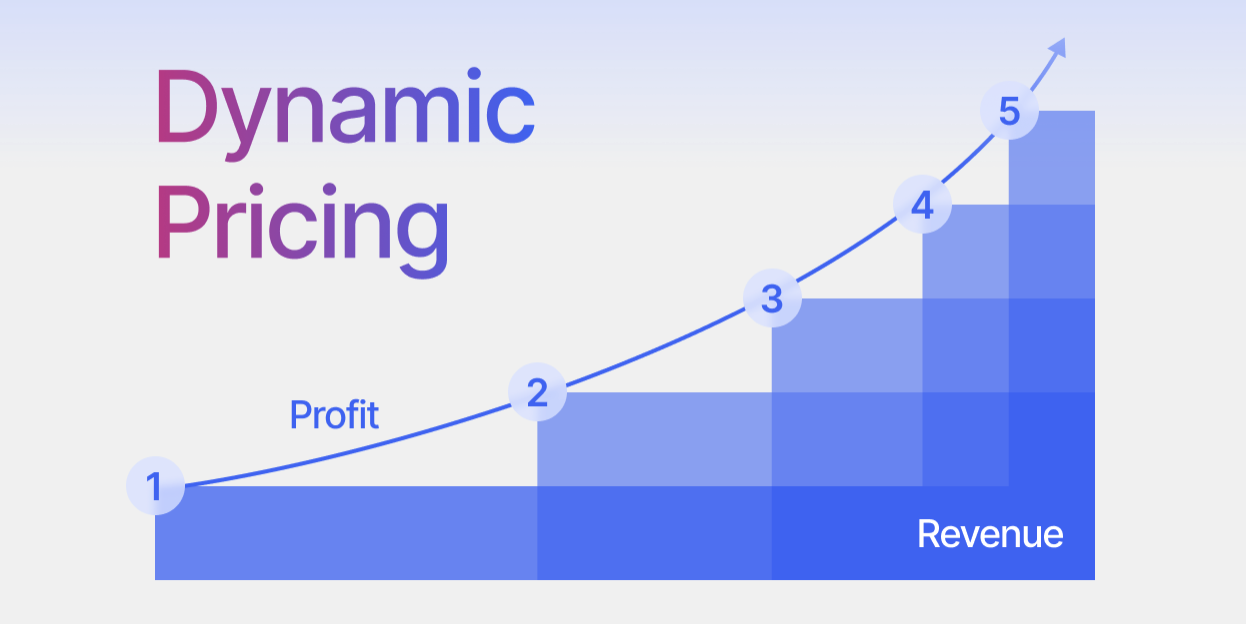
The conclusion first: EV charging for OEMs is not an infrastructure question. It is a distribution question. The OEM owns the most valuable asset in the EV charging value chain — the relationship with the driver inside the vehicle — and the strategy that converts that asset into recurring revenue does not require operating a single charger. Through NetworkCore, OEMs access every public charging network through one integration, earn a defined share of session revenue on every driver plug-in, and gain charging coverage that scales with the platform's network rather than with the OEM's capex. The compliance, invoicing, and settlement layers are handled by the platform. The driver charges at the transparent public price. The OEM earns. The infrastructure beneath is operated by someone whose business is to operate it. This is what EV charging for OEMs looks like when the architecture matches the asset.
The strategic instinct that has cost OEMs the most
The dominant approach to EV charging for OEMs over the past decade has been to own the charging experience end-to-end. Build proprietary networks. Negotiate exclusive CPO relationships. Develop branded charging apps. Position charging as a controlled product rather than a distributed service.
The cost structure that this approach has produced is now well documented. Proprietary networks require capex, ongoing maintenance, legal and compliance teams in every market the OEM operates in, customer support functions for charging issues, bilateral pricing negotiations with adjacent CPOs to extend coverage, and a continuous engineering investment to keep the charging platform competitive with dedicated CPO operators whose entire business is exactly that. None of these are small line items. Several of them are diffused across operational expenditure lines in ways that obscure the true cost of the charging strategy from the executives evaluating it.
The benefits, meanwhile, have been consistently less than projected. Proprietary networks cover a small fraction of the geography the OEM's drivers actually charge in. Branded charging apps face systematically lower usage than third-party alternatives that drivers chose voluntarily. Pricing strategies that involve marking up the CPO's wholesale tariff have eroded the trust the OEM hoped to build with its EV customers. Coverage gaps push drivers to other apps for the majority of their charging sessions, which is exactly the revenue the proprietary network was supposed to capture.
This is the picture that the broader OEM Charging Strategy discussion has been laying out for the industry: the closed model has structurally underperformed, and the open model is now the position that produces better economics, better driver experience, and better strategic positioning for the OEM. EV charging for OEMs as a category has moved past the proprietary-network era. The question for any OEM still building, defending, or expanding such a network is whether to keep absorbing the cost or to pivot to the architecture that the market has converged on as the right answer.
What the OEM actually owns
An OEM that has sold one million electric vehicles into a given market does not own one million chargers. It owns the relationship with one million drivers, every one of whom will charge multiple times a week for the lifetime of their vehicle, using whatever interface is most convenient at the moment they need to charge.
This is the asset that EV charging for OEMs should be built around. The vehicle's HMI on the dashboard. The OEM's mobile app, where it has been adopted. The connected services subscription, where it exists. The Plug and Charge authentication, where it is enabled. Every one of these is a distribution channel the OEM already owns and is uniquely positioned to use, because the driver is already inside the OEM's environment at the moment the charging decision is made.
The question is what to do with that distribution channel commercially. The answer the proprietary-network model gives is to channel the demand toward the OEM's own infrastructure, which limits its commercial value to the size of that infrastructure. The answer the open model gives is to channel the demand toward every public charger that exists, earning a defined share of every session that results — and using the OEM's distribution channel for what distribution channels are best at, which is making the right charging session happen at the right place for the right driver.
The asset is the driver. The strategy is distribution. The mechanism is per-session economics on the entire public charging network. This is the working model for EV charging for OEMs in 2026.
What NetworkCore delivers for OEMs
For OEMs joining the NetworkCore network as Distribution Partners — see the platform's Distribution Partners page for the full programme — the benefits picture is concrete and worth being specific about.
Access to every CPO on the network through one integration. The OEM connects once, through the platform's API or iframe, and the vehicle's HMI gains commercial access to every Charge Point Operator NetworkCore has onboarded. The network expands continuously as the platform adds CPOs. The OEM gains coverage automatically without negotiating bilaterally with any individual operator.
Public dynamic pricing for the driver. Every session charges at the CPO's transparent published tariff. The driver pays what the charger displays. There is no markup inserted between the charger and the driver — the pricing integrity that proprietary network strategies have historically failed to preserve is structural to the NetworkCore model.
Revenue share per session. A defined share of session value flows to the OEM automatically for every charging session the OEM's drivers complete through the integration. The economics are transparent, the settlement is on a short cycle, the revenue compounds with the OEM's EV fleet and with EV adoption in the markets it operates in. The OEM is paid for the access its vehicles provide rather than incurring cost to operate the infrastructure that provides access.
Optional bilateral arrangements with specific CPOs. Where the OEM has strategic volume in a specific geography or with a specific charging network, additional negotiated commercial terms can be configured on top of the public pricing baseline — a preferential rate for sessions between that OEM and that CPO, applied transparently, with full audit trail. The public tariff remains the baseline for every other driver. The bilateral economics layer in for the OEM and the CPO who agreed them. These arrangements are configured through the platform without bespoke commercial negotiations duplicated across multiple bilateral contracts.
Compliance and invoicing handled across jurisdictions. Multi-country VAT calculation, fee-type tax classification, real-time invoicing certification where required, audit-ready records per session, AML and KYC absorbed by the platform's regulated infrastructure. The OEM does not staff a compliance function for charging. It does not register for VAT in every country its drivers charge in. It does not carry Merchant of Record exposure across the markets its vehicles operate in. This dimension is significant and worth examining in detail — every market the OEM's vehicles drive in is a jurisdiction where the charging financial flow has to be handled correctly, and the operational difference between absorbing that responsibility internally and outsourcing it to the platform is substantial.
Driver experience native to the vehicle. The charging session initiates and completes within the OEM's own interface — the in-car HMI, the connected services app, the Plug and Charge authentication. The driver does not download a separate app, create a separate account, or manage a separate payment method. The charging session is a native feature of the OEM's product, branded and operated within the OEM's environment.
Plug and Charge support. Where the OEM has deployed ISO-15118 Plug and Charge capability in its vehicles, NetworkCore supports the protocol natively. The vehicle and the charger authenticate each other automatically. The session begins. The financial flow runs in the background. The driver does not initiate the charging session explicitly — they simply plug in. This is the seamless experience that proprietary OEM apps have promised and rarely delivered.
Integration flexibility. OEMs that want to build the charging interface inside the in-car HMI with full custom UX integrate through the NetworkCore API. OEMs that want to ship faster can use the platform's drop-in iframe inside their connected services app. Both produce the same operational outcome. The financial flow can stay inside the OEM's existing PSP and treasury infrastructure or run autonomously on NetworkCore's infrastructure — the OEM picks the configuration that fits its existing operating environment.
What this means strategically for OEMs
The shift from operating charging networks to running demand changes several strategic dimensions of the OEM's position in EV mobility.
Cost structure improves materially. The capex, ongoing operations, compliance overhead, and customer support cost associated with proprietary charging networks is removed. The OEM's investment in charging becomes the cost of the integration and the operational engineering to maintain the in-car interface — both of which are small relative to running a network.
Revenue line becomes additive rather than zero-sum. Earning per session on every charging event the OEM's drivers complete is a clean addition to the OEM's revenue picture. It does not cannibalise vehicle sales. It does not compete with the OEM's after-sales services. It is a recurring transactional layer that scales with the EV fleet and with usage, indefinitely.
Coverage is no longer the constraint. Proprietary networks have a coverage ceiling defined by what the OEM has built or contracted. Open distribution through NetworkCore has a coverage ceiling defined by the entire public charging infrastructure of every market the platform operates in — a ceiling that is several orders of magnitude higher and that grows with the platform's CPO additions rather than the OEM's deployment programme.
Driver experience becomes a competitive asset rather than a liability. Drivers who use the OEM's interface to charge across every public network they encounter develop a positive association with the OEM's brand at the moment of charging. The session works. The price is transparent. The interface is seamless. This is the experience the proprietary-network strategy was trying to engineer and consistently failed to deliver. It is the experience the open-distribution model produces almost by default, because the underlying conditions — network breadth, public pricing, native interface — align with what drivers actually want.
Strategic optionality expands. With charging handled by the platform layer, the OEM's product roadmap is freed to focus on the dimensions of EV ownership where the OEM is structurally competitive: vehicle design, software experience, energy management, connected services. The charging operation that previously consumed engineering and operational attention is no longer there to consume it. The OEM ships better cars and earns on the charging that the cars produce.
The position to take
If you are an OEM evaluating your charging strategy in 2026 — whether you are operating a proprietary network you are no longer sure is paying for itself, planning a new charging programme for an EV lineup expansion, or reconsidering the strategic frame for EV charging for OEMs after the past decade's results — the architecture worth taking seriously is the open distribution model.
You do not need to build chargers. Your drivers need access to every charger that already exists, in your interface, at the public price, with the experience that keeps them in your environment. You earn per session for providing that access. The platform handles everything beneath it. The infrastructure burden is absorbed by the layer that exists to absorb it.
NetworkCore is the platform that makes this real. The integration is single-API or iframe — your choice. The compliance, invoicing, and settlement layers run in the background. The driver charges. You earn. The strategic asset you have always owned — the relationship with the driver inside the vehicle — becomes a recurring revenue layer that compounds with your EV fleet and with the underlying market growth.
Reach the team at networkcore.org to discuss what EV charging for OEMs would look like for your specific position in the market.